
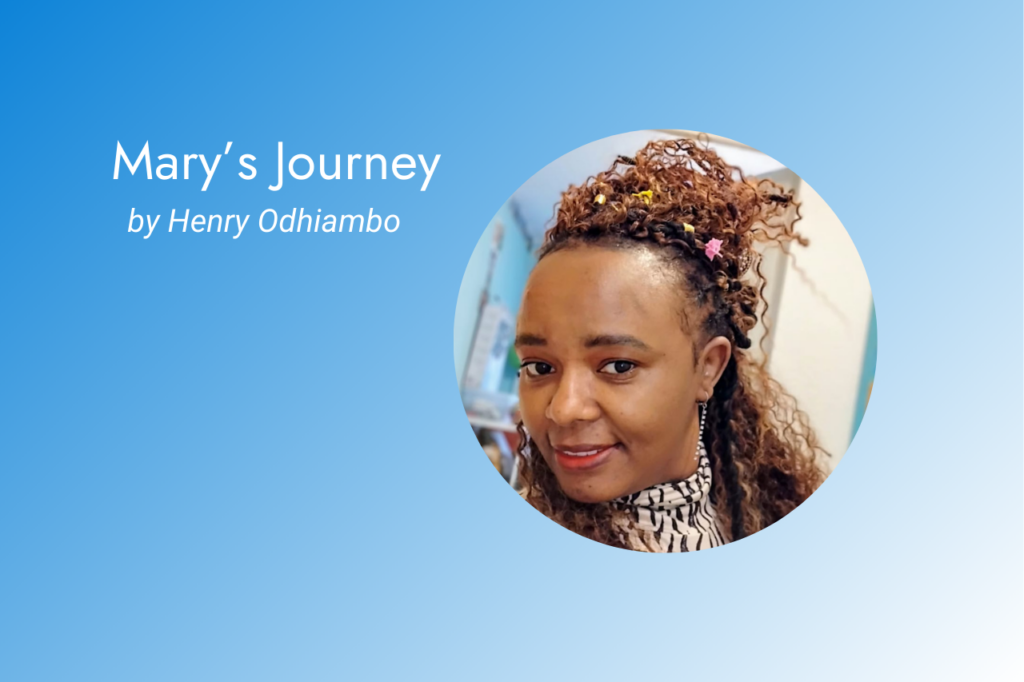
When Mary Kimani landed in Germany in February 2025, she wasn’t chasing a fantasy. She was executing a plan.
Back in Kenya, she had done her homework. She had completed her B2 German and her degree with years of experience as a high school teacher.
Her sister, who was already living in Germany, stepped in with an obligation letter (Verpflichtungserklärung). As a university graduate, Mary was qualified as a skilled professional. Fortunately, her degree was already recognized in ANABIN, meaning she did not need to submit it for additional evaluation by the Zentralstelle für ausländisches Bildungswesen (ZAB).
Recognized degree? Check. Blocked account? Sorted. Mary was ready to go.
The Chancenkarte isn’t a lottery ticket. It’s structured. Predictable and very direct.
If you meet all the requirements, your chances are high.
Mary applied in January 2025. By February, she was in Germany. By the end of August, she was standing in front of a classroom as a teacher in a public primary school in one of the German cities.
But let’s not romanticize it.
Germany welcomed her with paperwork.
Her first stop was the Anmeldung. Then came document translations and certifications. The documents she had translated in Kenya? Rejected.
Germany needed certified translations done locally. Then there was the recognition process. The quiet hero of this story is Anabin, the database that tells you whether your foreign degree is recognized.
Mary’s university was listed. That saved her months. If it hadn’t been, she would have gone through ZAB for formal recognition.
Her advice today is sharp and clear: Before anything else, check ANABIN. If your degree isn’t there, start the ZAB process immediately. Once your degree is recognized, you’re already halfway sorted.
The main friction wasn’t qualification. It was the administration. And then came the language question.
To teach in a German public school, you typically need a C1-level German. Mary had B2 when she arrived; she had to redo the B2 professional language again, and she is still learning. Still improving. On paper, she isn’t still qualified.
But here’s the reality in 2025: Germany has a serious teacher shortage.
Instead of waiting for perfection, she started applying.
“I simply began applying for roles and landed many offers. I settled for one that seemed perfect for me in a public school,” she says.
Within a month of arrival, she had multiple offers on the table. Let that sink in. Not private tutoring gigs. Public primary school roles.
The system needed her.
Her classroom became her language lab. Every day, she teaches and learns. Her German improves with every lesson, every parent meeting, every staff discussion. She is still studying and sharpening her skills.
Financially, the shift was undeniable. Teaching in Germany is significantly more rewarding than in Kenya. There is huge stability, structure, and predictability. A future you can plan around.
She has since applied for the EU Blue Card. Her employer supported the process. In the coming weeks, she expects to receive it, which will allow her to work more hours and secure a longer-term residency footing.
This is what progression looks like.
What started as a bold move has now become a bridge in helping others. Mary formed a WhatsApp group to guide Kenyans and, increasingly, professionals from other fields, on how to move to Germany via the Chancenkarte. Not just teachers. Engineers. Health workers. IT specialists.
The conversations are practical:
- How do I calculate my points?
- Is my degree on Anabin?
- What if it’s not?
- How much is required in the blocked account?
- What level of German is realistic before coming?
“People are coming,” she says. “Germany has a huge demand for teachers at the moment.”
And then she addresses the fear head-on.
“Kenyans fear losing the TSC teaching jobs in Kenya for the unknown. But I can tell you, it is worth the risk.”
That sentence carries weight. Because she understands what’s at stake. A government job in Kenya feels secure, familiar, and very predictable. Leaving it requires both ambition and belief. She had both.
Her timeline still surprises people.
January 2025 – Visa application.
February 2025 – Arrival in Germany.
End of August 2025 – Teaching contract secured.
In three months. One calculated move. But she’s careful not to oversell it.
“It’s not automatic,” she explains. “You must prepare. Study German seriously before coming. It changes everything.”
Language is a leverage in Germany. It unlocks conversations, contracts, and confidence. Mary insists on this in her WhatsApp group. Don’t shortcut the language.
Her story is not that of luck. It’s about alignment, a qualification meeting opportunity at the right time. Germany needs teachers. She is a trained teacher. The Chancenkarte created a structured pathway. She followed it.
Today, when she stands before her pupils in a German public school, she represents something larger than personal success. She represents mobility, strategy, and agency.
Germany’s teacher shortage is real. The severe crisis is a result of demographic changes, declining enrolments in teacher education programmes, and an ageing workforce.
Forecasts vary significantly, with estimates ranging from 68,000 to 177,500 fewer teachers by 2035.
Mary walked through it. And she’s holding it open for others.
This article was written by our Senior Content Writer Henry Odhiambo.
Chancenkarte Jobs!
With Chancenkarte Jobs! a job platform will soon be created here, bringing Chancenkarte candidates and jobs together. Register now to be among the first to access the platform.
Early Access to Chancenkarte Jobs!
Find jobs or candidates.
Enjoy exciting benefits for early users.


